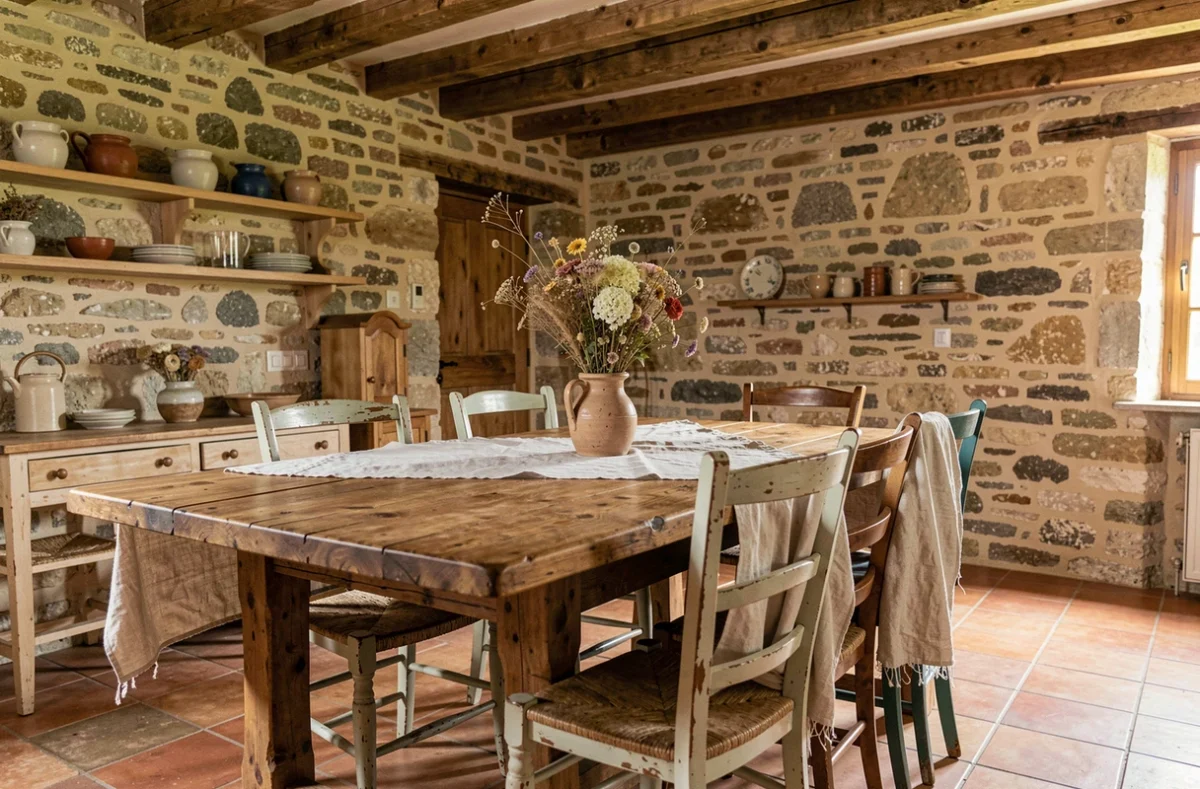
An oak sideboard found at a flea market, a farmhouse table worn by shared meals, a rattan armchair that creaks under the weight of a linen throw: the country style is built with furniture that carries a story. Each piece is chosen for the authenticity of its material, the warmth of its imperfect finishes, and its ability to age without losing character.
Country furniture in solid wood: what distinguishes a durable piece from a mere rustic effect
Have you ever noticed the difference between solid wood furniture and a particle board panel covered with oak veneer? The distinction is felt in touch, weight, and wear. A solid wood tabletop (walnut, cherry, chestnut) develops a patina over time. A laminated panel swells when it comes into contact with water and ages poorly.
The country style relies on this sturdiness. A solid oak farmhouse table, for instance, withstands decades of daily use. A solid wood piece ages, while a particle board piece deteriorates. This is the fundamental difference between a coherent country interior and a superficial decor.
To spot a solid wood piece at a market or online, several details matter. Weight is a reliable first clue. Traditional joinery (mortise and tenon, dovetails) indicates artisanal craftsmanship. The edges of the tabletop reveal the grain of the wood, without a plastic edge banding. Among the catalogs that list this type of artisanal and antique furniture, la-maison-de-daniel.fr offers pieces selected for their authenticity and condition.
Color palette and natural materials for a country interior
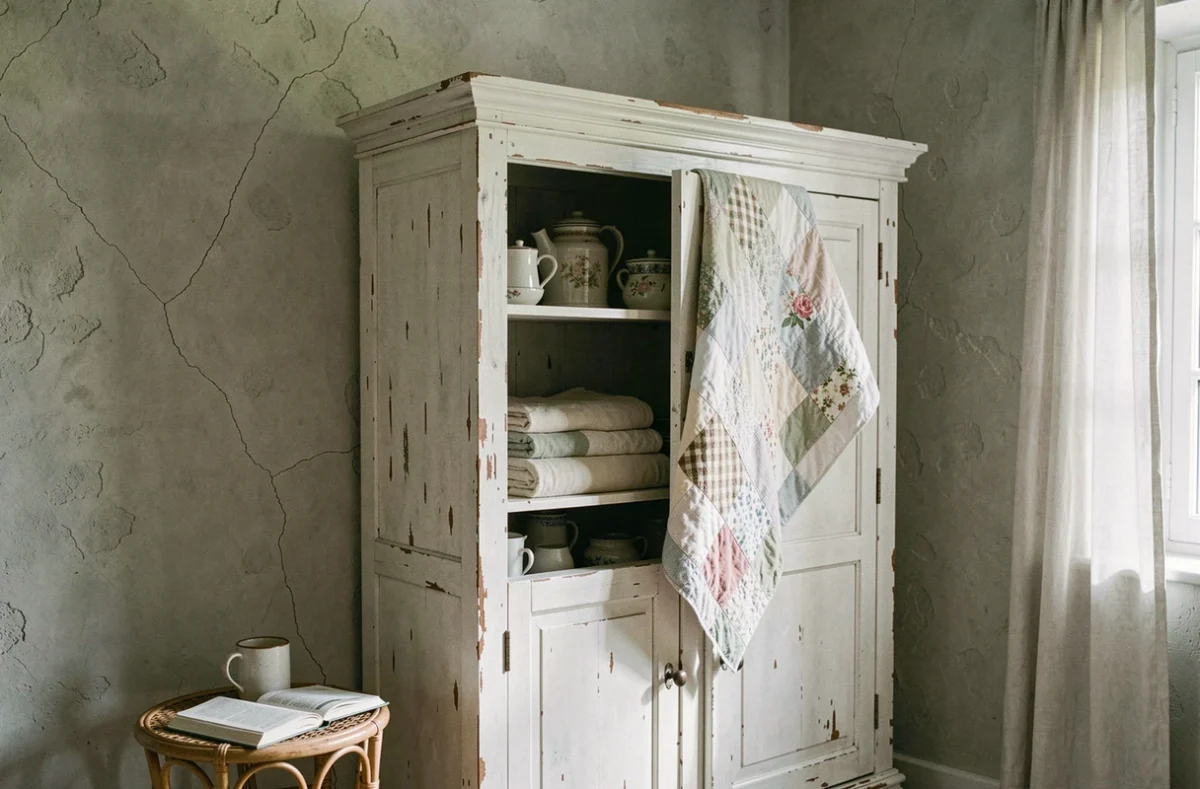
The choice of colors in a country interior follows a simple logic: observe what is found outside. The tones of beaten earth, raw linen, limestone, and light wood form the base. The country palette ranges from off-white to warm brown, passing through greige, sage green, and lavender blue.
This sobriety is not monotonous. It creates a neutral background that highlights textures. A lime-plastered wall, a tiled floor, a wrinkled linen curtain: each surface brings its own vibration without needing bright colors.
The materials that anchor the style
Linen, rattan, terracotta, and stone are the four cornerstone materials of the country style. Each plays a specific role in the ambiance of a room:
- Raw linen (tablecloths, curtains, cushion covers) softens the atmosphere and absorbs light without blocking it. Its slightly irregular texture enhances the artisanal character.
- Rattan and wicker add visual lightness to seating and storage. A rattan armchair or a woven basket is enough to anchor the country spirit in a living room.
- Terracotta (tiles, pottery, plant pots) introduces warm tones and a lively surface that develops a patina over time.
- Exposed stone, in a base or fireplace surround, gives the room a mineral grounding that evokes old rural houses.
Second-hand furniture and country style: a coherence that transcends trends
The market for new furniture is experiencing a downturn. Furniture sales have decreased in recent years, including in the early months of 2026. Meanwhile, second-hand platforms like Leboncoin, Vinted, or Selency are gaining ground.
For a country interior, this evolution comes at the right time. Chic or inherited furniture is the natural foundation of the country style. A Louis-Philippe dresser bought at a flea market, a walnut sideboard recovered from an estate: these pieces bear the marks of time that give them character.
Buying an antique piece second-hand requires a bit of vigilance. Check the stability of the structure by applying lateral pressure. Open the drawers to check the slides and bottoms. Inspect the legs: a rotten leg can be restored, but a broken leg hastily glued poses a structural problem.
Furniture reuse in France: an underutilized potential
French regulations are pushing manufacturers toward more reuse. The extended producer responsibility (EPR) framework, managed by the eco-organization Ecomaison, imposes repair and reuse targets for the furniture sector over the 2024-2029 period. However, furniture reuse remains minor compared to recycling or landfill, according to data reported by Amadeco in 2026.
Choosing an antique piece for your country interior contributes concretely to extending the lifespan of furniture. It is a gesture consistent with the spirit of the style: nothing is thrown away, everything is passed on.
Furnishing room by room: country kitchen, living room, and bedroom
The country style does not unfold in the same way in every room. Each space has its constraints and possibilities.
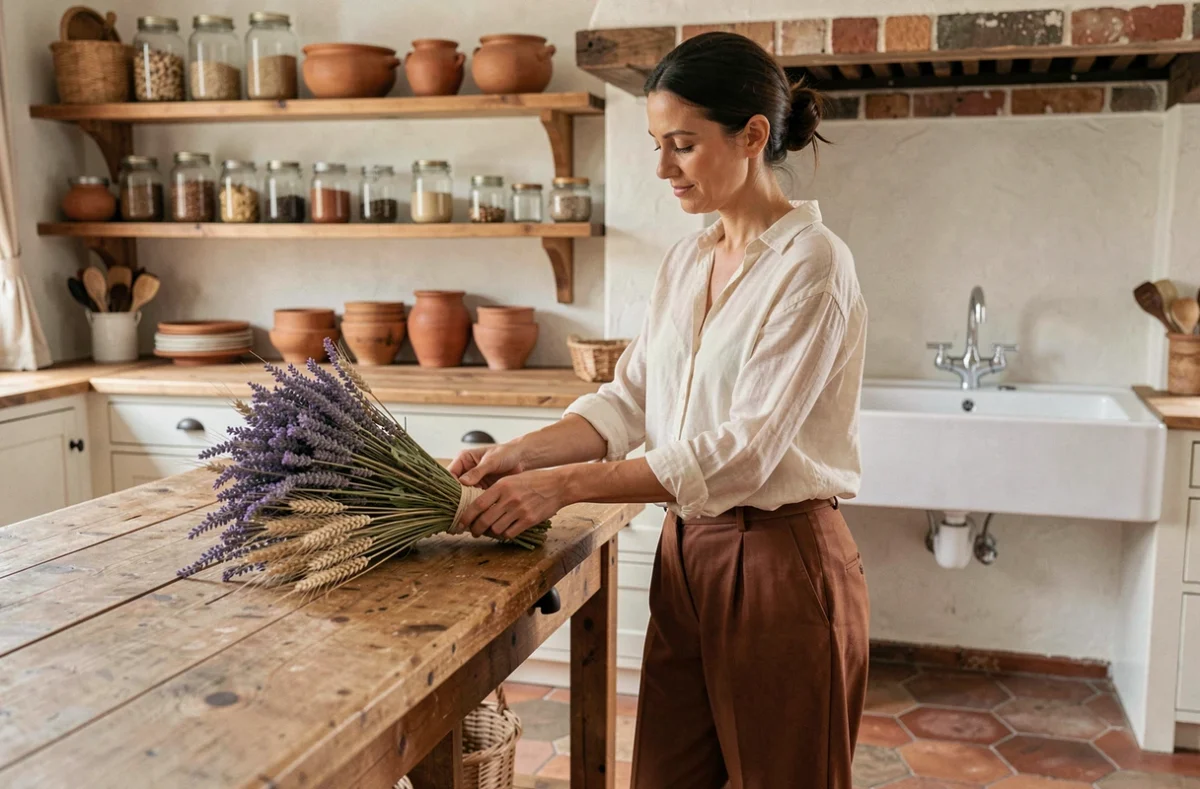
In the kitchen, framed facades with moldings set the tone. A solid wood countertop (beech or oiled oak) withstands intensive use. Open display cabinets and shelves replace closed cupboards to showcase dishes and jars, creating a family home atmosphere.
In the living room, the centerpiece is often a large rustic wood coffee table or an antique sideboard. A linen-covered sofa, a few cushions in natural tones, and a jute or wool rug are enough to set the ambiance. Avoid overcrowding: the country style breathes when the furniture has space around it.
In the bedroom, a turned wood or wrought iron bed, a second-hand bedside table, and a washed linen bedspread create a simple and calming ensemble. Dried flowers (lavender, immortelles, thistles) add a decorative touch without maintenance.
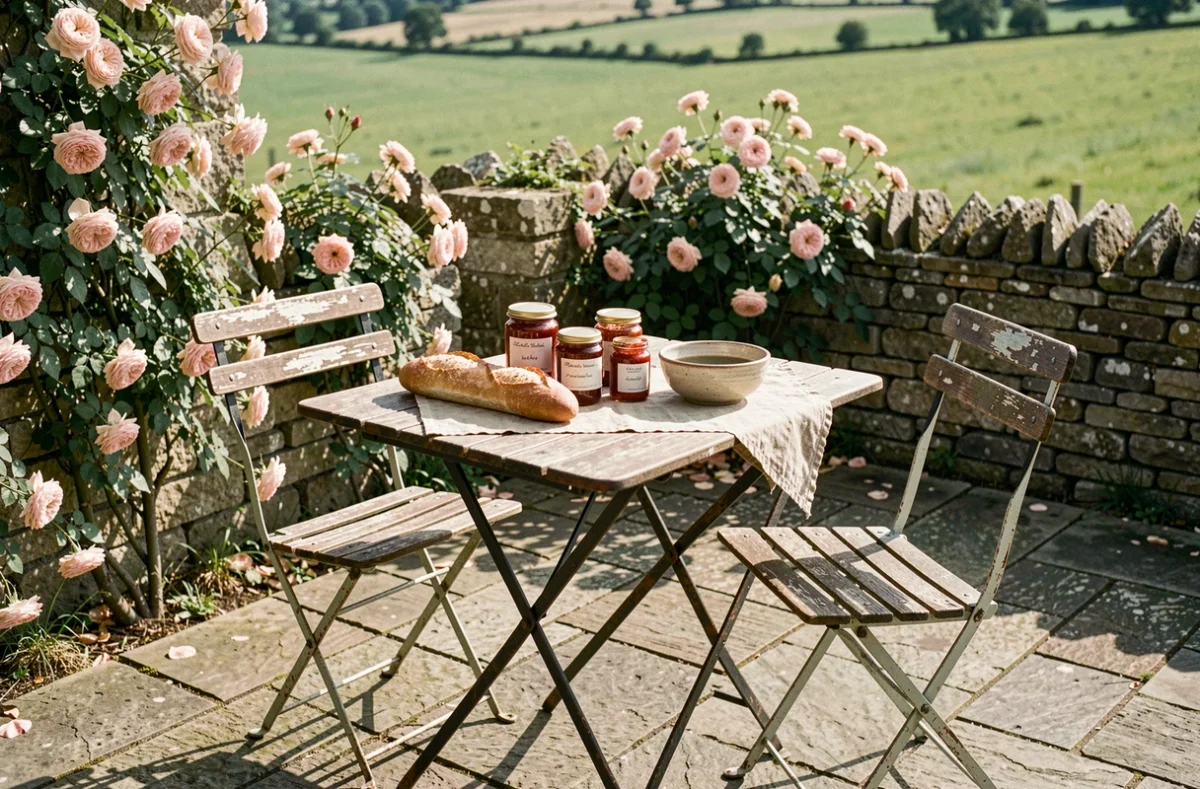
The country style requires neither an extravagant budget nor a complete renovation. It is built through thoughtful accumulation, prioritizing solid furniture and raw materials. A recovered piece, restored if necessary, brings more character than a new reproduction. The latest walnut sideboard found at a flea market will likely last longer than its kit equivalent.