
A package of bacon bits found at the back of the refrigerator, a few days past the date: should it be thrown away or can it still be used? The answer depends on several measurable parameters, from the type of date printed on the packaging to the actual storage conditions. This article compares reliable indicators to assess expired bacon bits and distinguish between a still consumable product and a risky one.
Expired bacon bits: freshness indicator table to check
Before making any decision, three categories of indicators allow for risk classification. The table below summarizes them.
| Indicator | Still consumable bacon bits | Bacon bits to throw away |
|---|---|---|
| Date (DLC) | Not exceeded, or exceeded by one day with strict cold chain | Exceeded by more than two days |
| Smell | Neutral or slightly salty/smoky | Sour, acidic, ammoniac |
| Color | Uniform pink | Grayish, greenish or brown spots |
| Texture | Firm, pieces well separated | Slippery, sticky film on the surface |
| Packaging | Intact vacuum-sealed, no swelling | Swollen, pierced or peeling |
One negative criterion in the right column is enough to render the product unfit for consumption. To delve deeper into the issue of expiration date and storage of bacon bits, the interactions between these indicators deserve closer examination.

DLC of bacon bits and actual margin after expiration
Bacon bits carry a use-by date (DLC), identifiable by the mention “consume by”. This date sets a health threshold, not just a simple marker of taste quality. It differs radically from the DDM (minimum durability date) found on pasta, rice, or canned goods.
Manufacturers calculate the DLC after microbiological tests conducted under optimal refrigeration conditions. Any break in the cold chain, even brief, reduces this margin to nothing.
Why the DLC of bacon bits allows so little tolerance
Raw or precooked charcuterie offers a medium rich in water and proteins, favorable to bacterial multiplication. Bacon bits packaged in a modified atmosphere limit the available oxygen, which slows down some aerobic bacteria. However, pathogens like Listeria monocytogenes can develop even in low-oxygen environments and at low temperatures.
A visually normal bacon bit may already be contaminated. The sensory test (smell, color, texture) detects advanced spoilage, not early-stage invisible contamination. This is the main limitation of home checks.
Storage of opened bacon bits: the most underestimated factor
Most consumers focus on the printed DLC. The determining parameter, however, is when the packaging was opened. Once opened, the protective atmosphere disappears and the bacterial clock speeds up.
- Opened bacon bits in the refrigerator (between 0 and 4 °C): consume within 48 hours maximum, even if the DLC is still several days away
- Bacon bits left out for more than two hours at room temperature: the risk of bacterial proliferation makes the product suspect, regardless of the date
- Bacon bits repackaged in an airtight container after opening: the duration remains limited to 48 hours, but protection against cross-contamination is better than a package simply folded
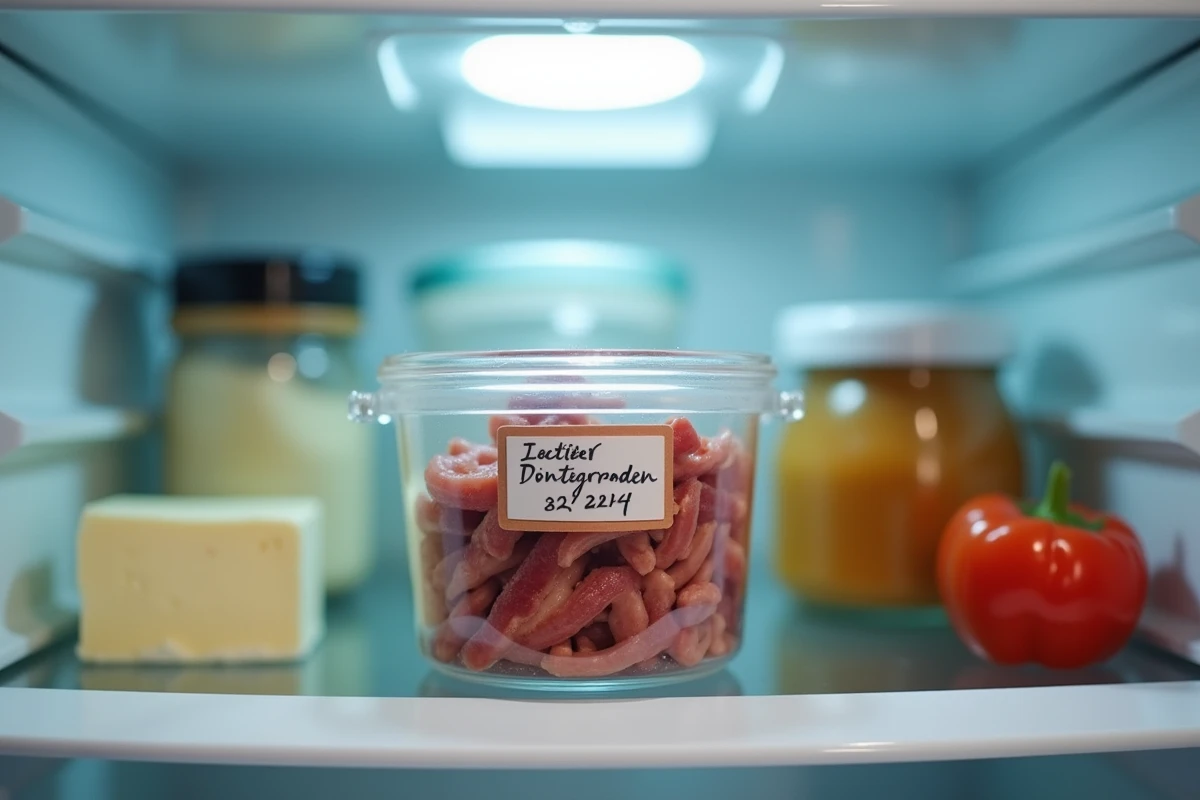
The most reliable reflex is to note the opening date directly on the packaging. This time marker counts more than the DLC in daily practice.
Freezing bacon bits: what it corrects and what it does not
Freezing bacon bits to extend their shelf life is a common practice. It works, under one strict condition: the bacon bits must be healthy at the time of freezing.
Freezing stops the multiplication of microorganisms. It does not destroy them. A package that has already been opened for three days, with a surface starting to become sticky, will not be “rescued” by the cold. The bacteria already present will resume their activity as soon as thawed.
Freezing method suitable for bacon bits
- Freeze bacon bits in their original unopened packaging, or transfer them to an air-removed freezer bag
- Label with the freezing date to keep a reliable reference
- Thaw in the refrigerator (never at room temperature) and cook within 24 hours of thawing
- Never refreeze bacon bits that have already been thawed: each thawing cycle restarts bacterial growth
Cooking and expired bacon bits: a false sense of security
A common belief is that cooking at high temperatures eliminates all danger. In reality, cooking kills live bacteria but not all the toxins they have already produced. Some toxins can withstand temperatures well above those of a home skillet or oven.
Cooking bacon bits that have changed in smell or texture does not restore their safety. Cooking remains a safety supplement for bacon bits still within acceptable limits, not a rescue tool for a spoiled product.
The risks associated with consuming contaminated bacon bits range from mild digestive issues (nausea, diarrhea) to more serious infections like listeriosis, particularly dangerous for pregnant women, the elderly, and immunocompromised individuals.
The takeaway is summed up in one sentence: an unexpired DLC guarantees nothing if the packaging has been opened for more than 48 hours. The systematic cross-checking of the printed date, the opening date, and the sensory examination remains the only reliable method to decide the fate of a package of bacon bits.