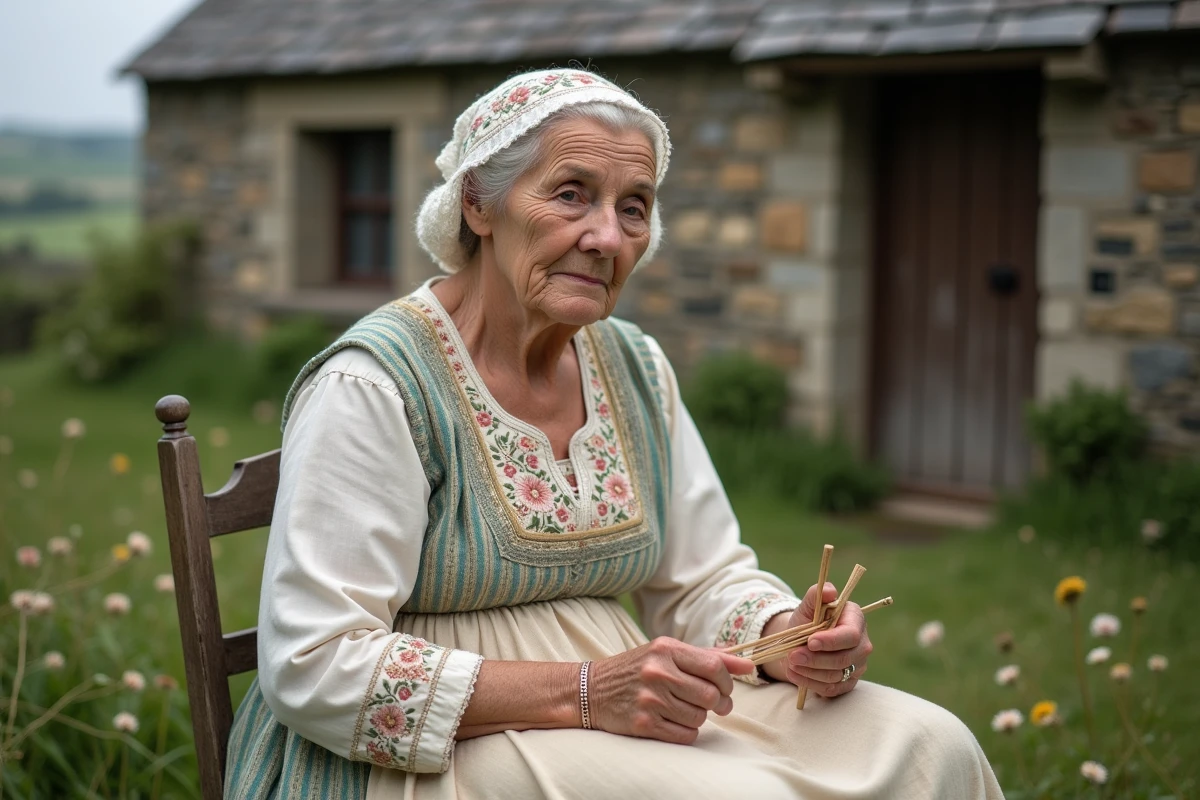
Breton, a Celtic language, is among the oldest regional languages in Western Europe, but it has never been recognized as an official language in France. Despite assimilation policies carried out in the 20th century, thousands of students today receive bilingual Breton-French education.
Since 1972, the galette-saucisse has been served every Saturday at the Rennes markets, but its traditional recipe forbids the addition of any toppings. The bagadoù, musical ensembles inspired by Scottish pipe bands, only date back to the post-war period, although their presence is now inseparable from regional festivities.
What makes the soul of Brittany: between heritage and living identity
It is impossible to reduce Breton culture to a series of fixed rites or museum costumes. Here, Breton traditions weave into daily life, passed down from generation to generation, often through the Breton language, this taught Celtic language that has resisted standardization policies. Whether in Rennes, in Finistère, or along the cliffs, Brittany proudly claims a unique identity, woven around its intangible cultural heritage that each village jealously guards.
The Breton heritage lives through the stone of chapels, the energy of festoù-noz, but also in the way the Bretons constantly reinvent their heritage to avoid freezing it in the past. Celtic culture nourishes today’s creation, inspiring novelists, musicians, and visual artists. Here, dance is not a spectacle reserved for a few initiates: it is a shared practice, sometimes engaged, that brings together all generations.
Some markers to grasp the extent of this vitality:
- Breton language: nearly 15,000 students discover bilingualism at school, embodying a vibrant transmission.
- Traditions: the galette-saucisse at the Rennes markets, pardons, the bigouden costume, every detail tells a plural identity.
- Culture Bretagne: an expression that encompasses everything from fest-noz to digital creation, from the defense of Breton to international openness.
In Brittany, heritage does not lock itself behind display cases: it invites itself into daily life, challenges preconceived ideas, questions the balance between heritage and modern life. This powerful connection to Breton culture gives the region a rare strength, always on the edge between preservation and invention.
What cultural treasures lie behind Breton legends, language, and symbols?
The Breton territory is filled with legends, weaving a landscape where history, faith, and popular tales resonate. Brocéliande, with its dark alleys and clearings, remains the living theater of Arthurian legends. Merlin, Viviane, magical springs, and menhirs: every corner holds the memory of a myth, every path seems to whisper a story passed down quietly.
The Breton language remains a pillar of regional identity. It colors place names, resonates in Diwan schools, and is present during major festive gatherings. On the symbols side, the triskell and the ermine are displayed everywhere: on town halls, in fashion, even in contemporary art. The Gwenn ha Du flag flies in the ports of the Gulf of Morbihan or in Saint-Malo, reminding of the pride of a region turned as much towards the land as towards the sea.
A small selection to illustrate this diversity:
- Art: from Pont-Aven to the northern coast, Brittany has attracted Gauguin, captivated painters, and continues to inspire contemporary art galleries.
- Breton gastronomy: buckwheat pancakes, kouign-amann, clams from Mont-Saint-Michel, dry cider. Here, each recipe evokes a story, a terroir, a shared memory.
- Traditional music and instruments: bombarde, biniou, Celtic harp. These instruments set the rhythm for festoù-noz and animate the streets during festivals, weaving a living link between generations.
Every village, every port, every heath bears the mark of a Celtic culture that continues to engage in dialogue with the world. In Brittany, history is always in motion.
Fest-noz, festivals, and events: diving into the excitement of Breton events
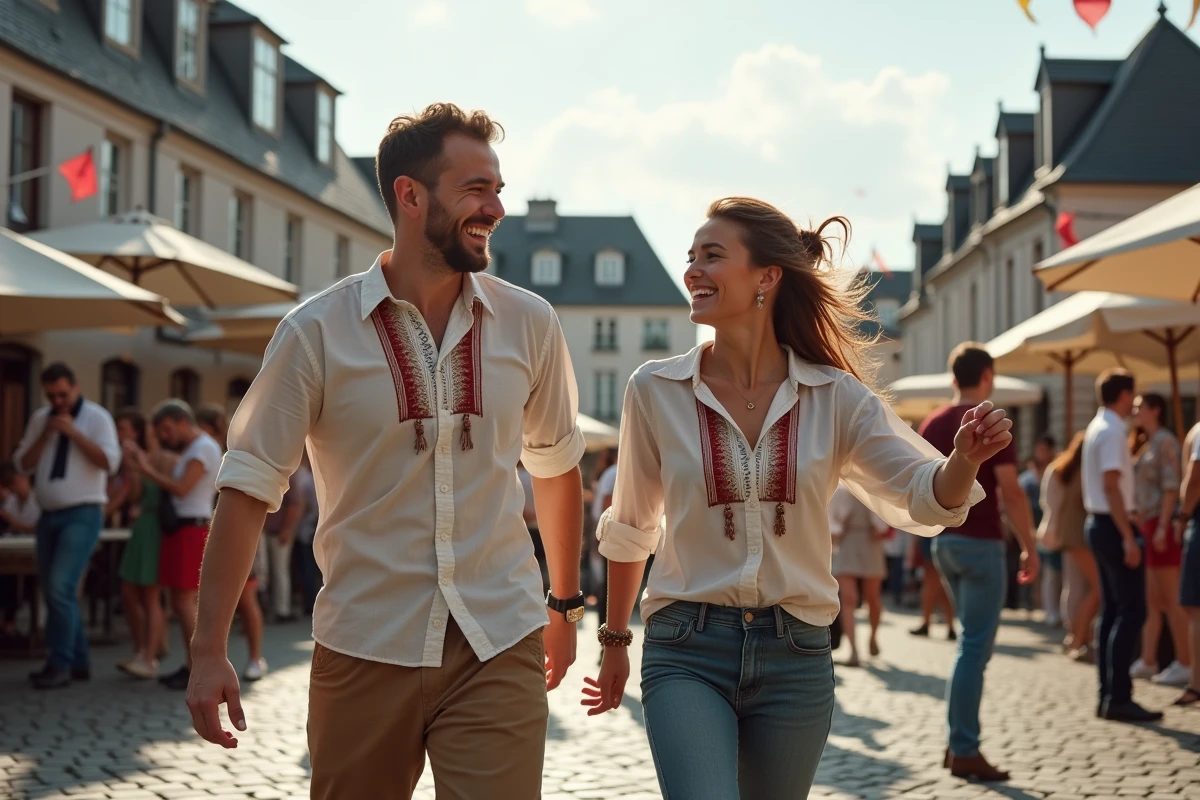
The fest-noz, inscribed in the intangible cultural heritage of UNESCO, is experienced to the rhythm of steps, linked arms, and voices that rise late into the night. Through these musical nights, Brittany asserts its ability to blend Celtic heritage and contemporary creation. Traditional musicians share the stage with seasoned dancers and newcomers, in a unifying atmosphere.
It is impossible to mention Breton cultural life without referencing its major music festivals, true highlights of the year. The Interceltic Festival of Lorient draws crowds from all Celtic nations every summer. In Quimper, the Cornouaille Festival highlights the diversity of Breton identity, between embroidered costumes and concerts of modern or ancestral Breton music. Rennes is not to be outdone, with the Mythos Festival that gives full place to the art of spoken word, storytelling, and theater, extending a vibrant oral tradition.
Some markers to grasp the richness of these events:
- Fest-noz: places where music is reinvented and Breton dances are passed down tirelessly.
- Interceltic Festival of Lorient: a unique meeting point connecting Scotland, Ireland, Wales, Galicia, and of course Brittany.
- Cornouaille Festival: a dive into local art of living, gastronomy, and popular arts.
Traditional music also fills the streets of Saint-Malo during gatherings at the foot of the ramparts. Celtic music festivals multiply exchanges and weave bonds between generations. Here, every event becomes an opportunity to rediscover Breton traditions, to share a moment, a dance, a story. The celebration, like a common thread, continues to unite and surprise.