France prohibits ethnic and religious statistics in its censuses. This legal peculiarity makes any estimation of the number of Muslims in a given territory, including Corsica, dependent on indirect methods: cross-referencing data on countries of origin, migration flows, or national declarative surveys. For Corsica, figures circulate, but their reliability deserves careful examination.
Why no census counts Muslims in Corsica
The French legal framework is based on the law of January 6, 1978, relating to data processing and freedoms. This law prohibits the collection of data related to religious affiliation in public censuses. INSEE does not ask any questions about religion, neither in mainland France nor in Corsica.
The estimates circulating in the press or on social media therefore come from projections based on the countries of birth of foreign or naturalized residents. A presumed religion is attributed to individuals based on their geographical origin, which raises an obvious methodological problem: not all immigrants from a predominantly Muslim country are practicing or even believing.
To attempt to approach the number of Muslims in Corsica, analysts rely on the proportion of the population of Maghreb origin on the island, compared to the total island population. This method produces broad ranges and significant margins of error.
Population of Maghreb origin in Corsica: what migration data says

Corsica hosts a notable share of immigrants from the Maghreb, primarily from Morocco and Tunisia, followed by Algeria. This immigration, which is historical and linked to labor needs in construction, agriculture, and the tourism sector, has structured a community that has been established for several decades.
A significant portion of the island’s immigrants comes from the Maghreb, which fuels a probable but unquantified growth of the population of Muslim culture or tradition. Local demographic analyses also note a recent increase in asylum requests from Algerian and Moroccan nationals in Corsica, a trend that contributes, marginally, to this evolution.
The estimated proportion of Muslims in Corsica is said to be higher than the national average. The explanation lies in a simple arithmetic mechanism: the relative weight of Maghreb immigration carries more weight in a small island population than in a metropolitan population of several tens of millions of inhabitants. This proportional effect does not mean that Corsica has more immigrants in absolute terms, but that their share in the local total is statistically more visible.
Effect of seasonal tourism on perceived presence
A factor rarely taken into account in debates skews the perception of the Muslim presence in Corsica: the tourist season. Every summer, the island’s population massively increases with the influx of vacationers.
Existing estimates highlight that seasonal tourism significantly increases the Maghreb-origin population present on the island, particularly in urban and coastal areas. This phenomenon creates a gap between the permanent presence (year-round residents) and the perceived presence during the peak season.
This gap is rarely distinguished in public debate. Summer visual impressions crystallize into subjective estimates that do not reflect the annual demographic reality. A neighborhood in Ajaccio or Bastia in August does not resemble the same neighborhood in February, and conclusions drawn from seasonal observation lack reliability.
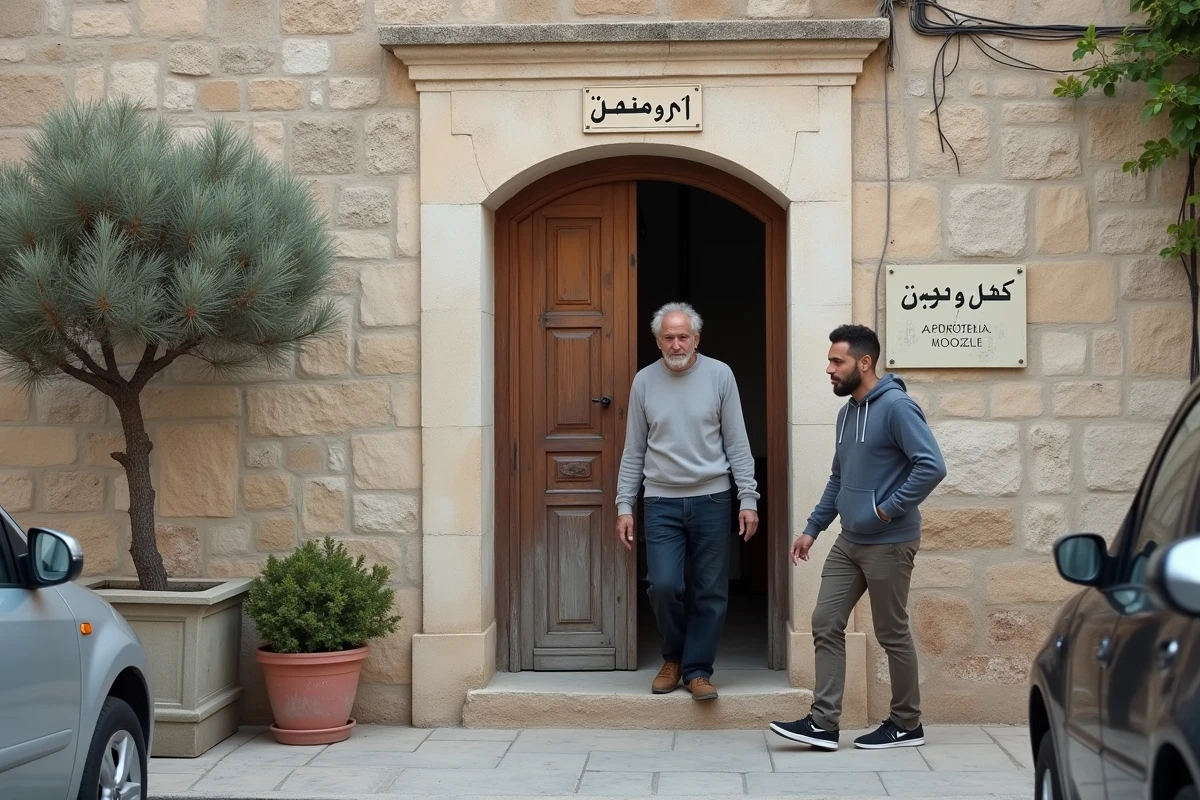
Places of Muslim worship in Corsica: prayer rooms and mosques
The Muslim religious infrastructure in Corsica remains modest compared to the mainland. The island does not have a large mosque in the architectural sense. Worship is primarily organized around associative prayer rooms, often located in repurposed premises.
These places of worship are concentrated in the two main urban areas:
- Ajaccio hosts several prayer rooms serving the Muslim community of South Corsica, with varying capacities depending on the managing associations.
- Bastia and its outskirts also have associative prayer rooms, sometimes overcrowded during major religious holidays like Ramadan or Eid.
- In rural areas and small towns, collective religious practice remains more discreet, due to a lack of dedicated premises and the geographical dispersion of worshippers.
The limited number of places of worship serves as an indirect, albeit imperfect, indicator of the size of the practicing community. However, it is essential to distinguish between declared Muslims, practicing Muslims, and regular practicing Muslims, three categories that do not overlap.
Corsica and national average: a comparison to be approached with caution
At the national level in France, estimates of the number of Muslims vary according to sources and methodologies. Several million people are involved, but the figures vary depending on whether one counts practitioners, declared believers, or people of Muslim culture in a broad sense.
For Corsica, the situation presents two specificities that make comparison with the national average delicate:
- The total population of the island remains low, which mechanically amplifies the relative weight of any demographic group.
- Maghreb immigration occupies a proportionally more significant place there than in most metropolitan regions, due to the local economic structure (seasonality, construction, agriculture).
- Summer tourist flows blur the distinction between permanent residents and transient populations.
Claiming a precise percentage of Muslims in Corsica is a matter of extrapolation, not rigorous statistics. The figures circulating online correspond to estimates constructed on hypotheses of religious affiliation by country of origin, a method that ignores individual journeys, conversions, atheism, and secularization.
The only factual certainty concerns the long-standing and structured presence of a community of Maghreb origin on the island, visible through associations, prayer rooms, and intercommunity exchanges organized each year, particularly during Ramadan. Accurately quantifying this community would require a change in the legal framework that France does not envision.