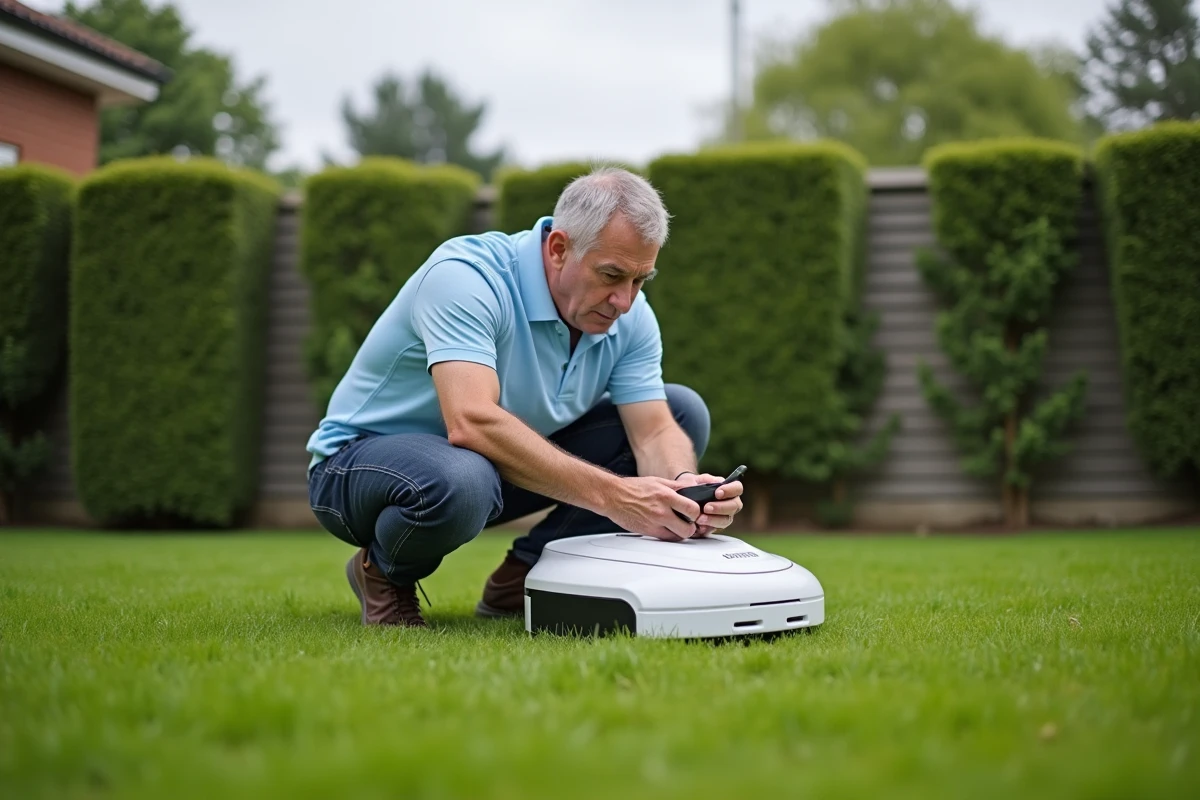
A robotic mower left unattended on a lawn is an easy target: lightweight, silent, often lacking a physical attachment. Protecting a robotic mower against theft relies on three complementary levels: the software locks integrated into the device, the physical devices around the charging station, and the insurance conditions that govern compensation.
Software Locking After Theft: What Manufacturers Render Unusable
Most guides detail the PIN code and GPS. A lesser-known mechanism acts downstream of the theft: the permanent locking by serial number. Since 2023, several manufacturers not only block the use of the stolen robot but also its software updates and access to spare parts for serial numbers reported as stolen.
Husqvarna mentions this policy in its Automower Connect Privacy notice (updated version in 2023). Ecovacs applies a similar principle in the service conditions of the Goat range, revised in 2024. The stolen robot becomes an unusable and irreparable device, significantly reducing its resale value.
This locking transforms theft into a low-profit operation. A second-hand buyer who comes across a locked device cannot reset it or obtain replacement parts from the manufacturer. Among the anti-theft solutions for robotic mowers, this software lock is the most difficult layer to bypass for a thief.
PIN Code, Alarm, and GPS: Settings to Activate Upon Robot Installation
These three functions are present on the majority of recent models, including Husqvarna’s Automower and competing ranges. The problem is that they often remain disabled by default or configured with a generic code.
PIN Code and Locking on Startup
The PIN code blocks any use without prior entry. Change the default code at the first installation. A four-digit code is enough to render the robot unusable for an opportunistic thief hoping to leave with a functional device.
Sound Alarm and App Notification
The alarm triggers when the robot is lifted or moved out of its mowing area. On connected models, a notification is sent simultaneously to the owner’s app. The deterrent effect works especially in residential areas where noise attracts attention.
GPS Tracking and Geolocation
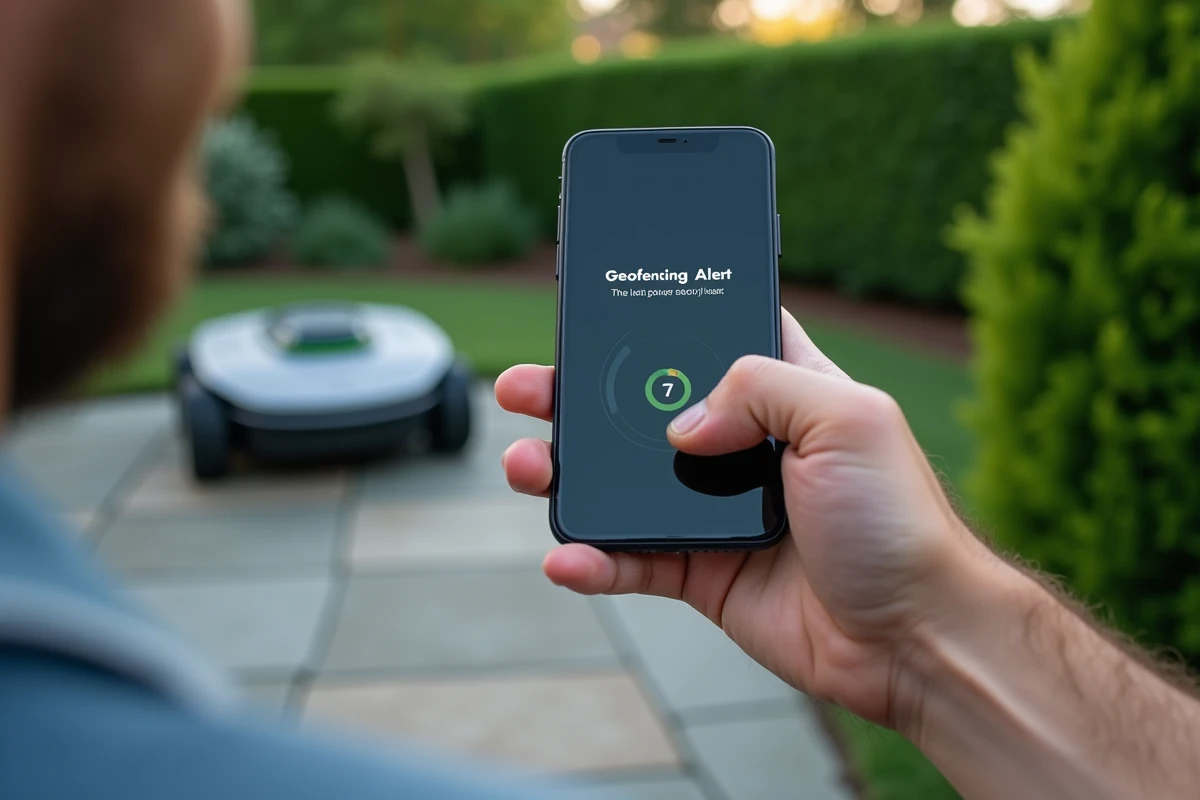
The integrated GPS allows for real-time location of the robot via the app. Some models add a geofencing feature that triggers an alert as soon as the device leaves a predefined perimeter. This location data can be transmitted to law enforcement in case of a complaint.
A point of caution noted by the German and Swedish police: never go to the last GPS position of a stolen robot yourself. The explicit recommendation is to pass this data to the authorities to avoid any confrontation.
Physical Protection of the Charging Station and Storage of the Robotic Mower
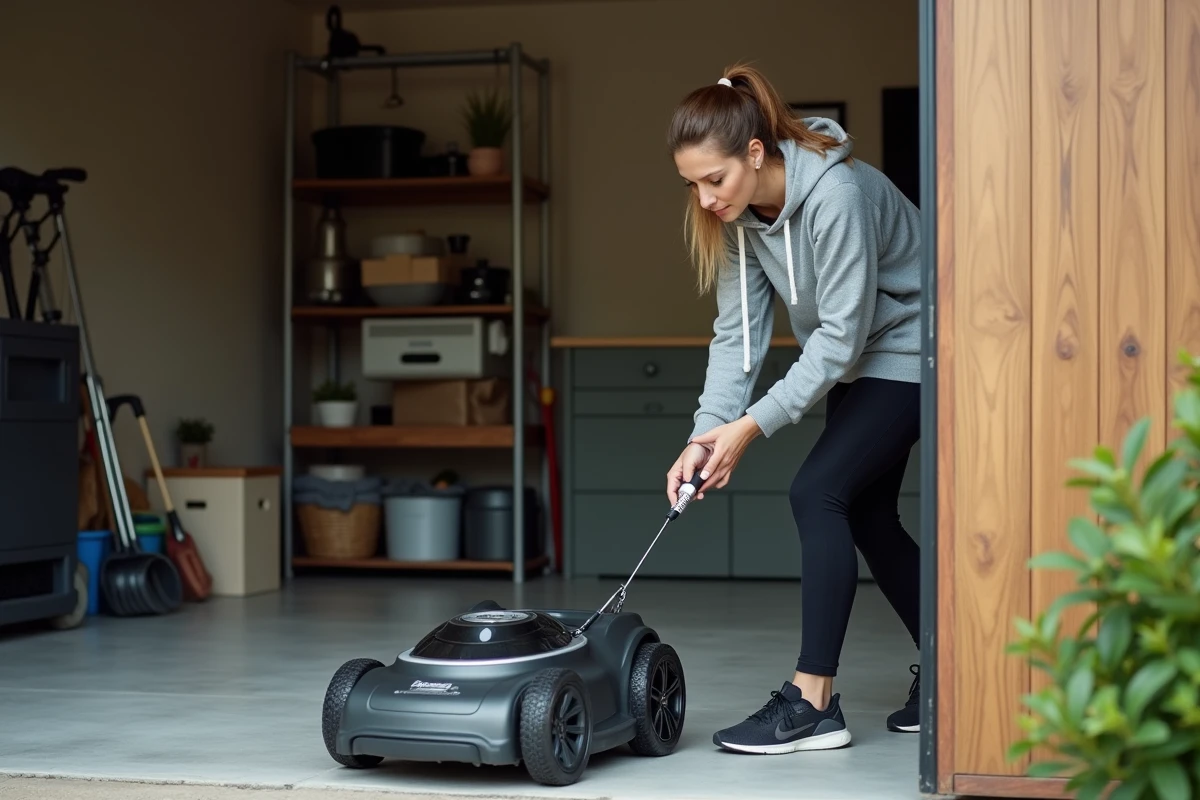
Software protections do not replace a physical barrier. Securing the charging station to the ground and sheltering the robot complicate theft as much as they protect the device from the elements.
- Anchoring the station to the ground with screws or concrete anchors prevents a thief from leaving with both the station and robot in a matter of seconds.
- A locked shelter (dedicated garage, metal box) visually conceals the robot and adds a physical obstacle. Some models made of galvanized steel are specifically sized for robotic mowers.
- An anti-theft steel cable connecting the robot to a fixed point slows down theft, even if it does not completely prevent it against cutting tools.
- Storing the robot in a closed location every evening, outside of scheduled mowing periods, remains the simplest and most effective measure.
Combining anchoring, shelter, and nighttime storage significantly reduces the risk. A thief who must force a shelter, cut a cable, and face a sound alarm usually abandons in the vast majority of cases.
Home Insurance and Robotic Mower Theft: Conditions to Check Before a Claim
Home multi-risk insurance often covers the theft of items located in the garden, but exclusions are numerous. Several insurers, including La Mobilière in Switzerland (fact sheet updated in 2024), now require that the robot be secured or stored in a closed location to be compensated in case of theft outside.
The “non-burglary” theft in an open garden is explicitly excluded by some French contracts. In practice, if the robot is simply placed on its station without a cable or shelter, the insurer may refuse compensation.
Some insurers also check afterwards that the anti-theft settings were activated: PIN code in service, alarm not disabled, functional GPS. A robot whose software protections were disabled at the time of theft may be denied coverage, just like a door left open during a burglary.
Before the mowing season, review the general conditions of your contract. Check the compensation limit for outdoor items and the applicable deductible. If your robot represents a significant investment, a specific warranty extension for garden equipment may be more suitable than standard coverage.
Protecting a robotic mower against theft relies on the systematic activation of software locks, a physical anchoring of the station, and insurance conditions that truly match your usage. The blocking of stolen serial numbers by manufacturers is gradually making these devices less attractive for resale, which should curb opportunistic thefts in the coming years.