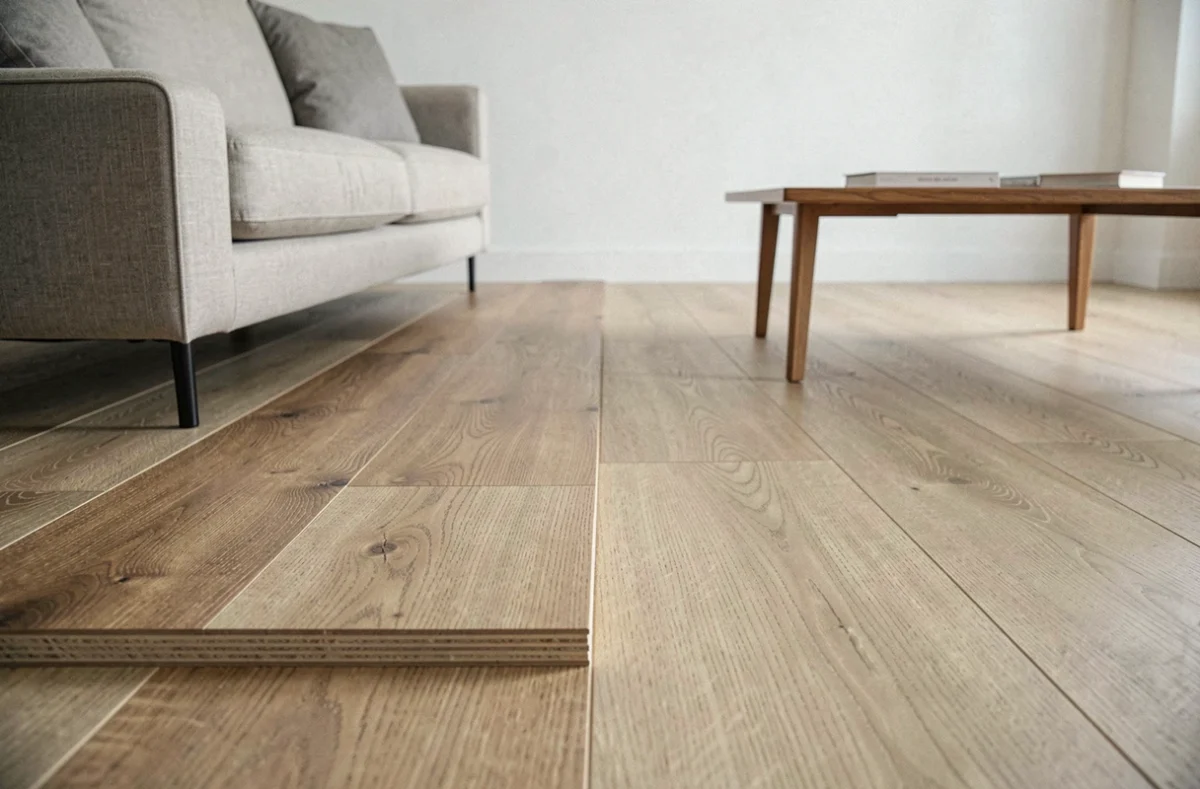
The difference between 10 mm and 12 mm laminate flooring is about more than just two extra millimeters of comfort. Plank thickness affects rigidity, acoustic performance and compatibility with the existing subfloor, but it says nothing about surface durability on its own. Before making a decision, you need to weigh several technical factors that product specifications don’t always highlight.
AC abrasion rating and use class: the true indicators of laminate flooring durability
12 mm laminate flooring rated AC4 is more resistant to heavy foot traffic than 10 mm flooring rated AC3. But the reverse is also true: 10 mm AC5 flooring outperforms 12 mm AC4 flooring. The EN 13329 standard defines these abrasion classes independently of plank thickness.
The use class (23, 31, 32, 33) provides additional information. It combines abrasion resistance with the type of space: heavy residential use, moderate commercial use or general commercial use. We recommend always checking both ratings on the technical data sheet before comparing thicknesses.
To make an informed decision when choosing 10 mm or 12 mm laminate flooring, start by checking the AC rating and use class together.

Laminate flooring thickness and renovation: total installed height and threshold constraints
In new builds, choosing between 10 mm and 12 mm rarely causes clearance issues. Renovations are a different story. Total installed height includes the plank, the underlay and, in some cases, an integrated underlay. Some products listed as 12 mm already have an acoustic backing bonded to the underside of the plank, bringing the total thickness to more than 1.5 cm.
This extra height affects three practical areas:
- Clearance beneath interior doors, which may require trimming the door or replacing the door frame if there isn’t enough room.
- Transitions to adjacent flooring (tile or existing wood flooring), where an incorrectly sized transition profile creates an uncomfortable, non-compliant step.
- Skirting boards, which need to be tall enough to cover the height difference without leaving a gap between the wall and the flooring.
Before ordering, measure the clearance between the finished screed and the bottom of the door. Subtract the thickness of the planned underlay, then compare the result with the actual plank thickness (excluding any integrated underlay). The product specifications should clearly distinguish between these two measurements.
Laminate flooring and underfloor heating: thermal resistance matters more than thickness
Thickness alone does not determine whether laminate flooring is compatible with underfloor heating. The key factor is the total thermal resistance of the flooring and underlay combined. Most underfloor heating system manufacturers set a maximum thermal resistance that must not be exceeded to ensure proper performance.
12 mm laminate flooring with a dense HDF core may have thermal resistance comparable to that of 10 mm flooring with a less compact core. Panel composition, density and underlay type matter more than the two-millimeter difference.
If your home has a low-temperature underfloor heating system, ask the manufacturer for the product’s thermal resistance value (expressed in m²·K/W) and add it to the underlay’s value. Exceeding the threshold recommended by the underfloor heating installer reduces efficiency and increases energy consumption.
Integrated or separate underlay: a choice that changes the calculation
Premium 12 mm laminate flooring often comes with an integrated acoustic underlay. This layer improves impact sound insulation, but it also adds thermal resistance that is already included in the stated thickness. Check whether the stated thermal resistance applies to the complete product or to the plank alone.
With a separate underlay, you have more control: choose a product with low thermal resistance if required by the underfloor heating system, or a more insulating model if the floor is above an unheated crawl space.
Acoustic comfort and rigidity: where two millimeters make a real difference
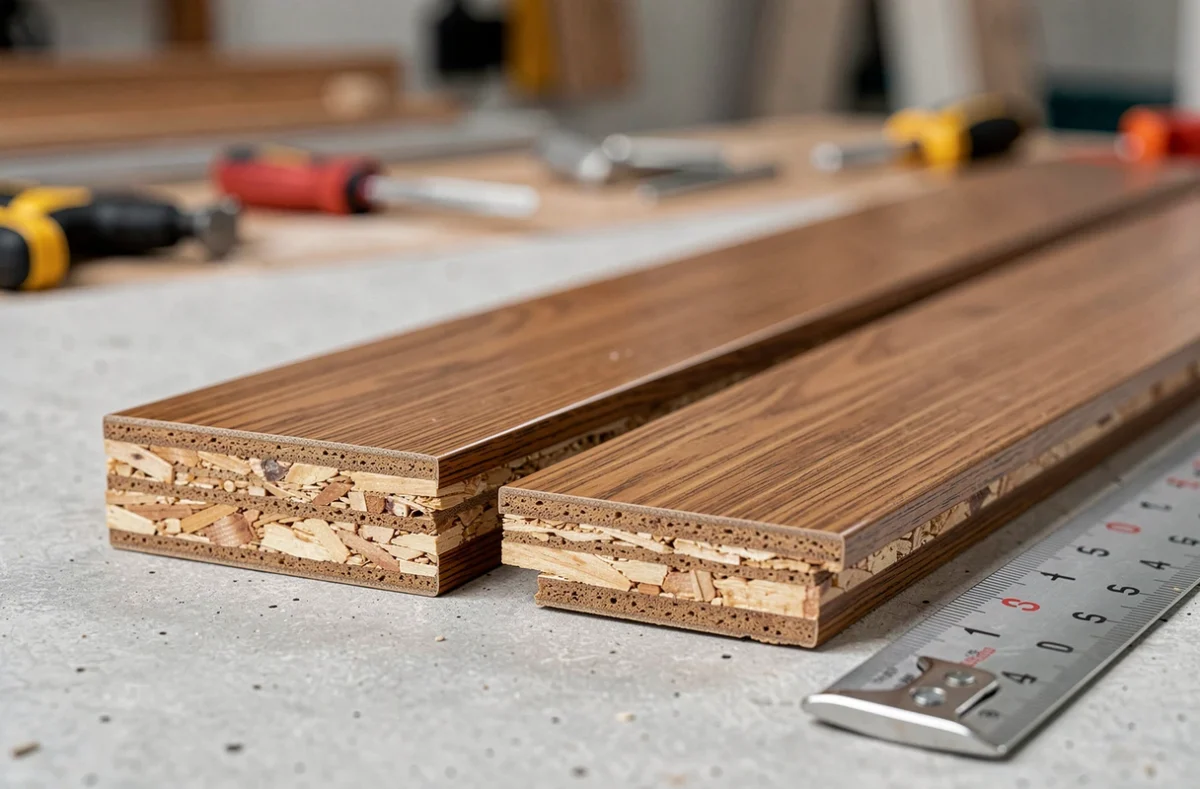
The difference between 10 mm and 12 mm is most noticeable in terms of acoustics. A thicker plank, with an HDF core of equivalent density, reduces the hollow sound underfoot more effectively. Footsteps sound deeper and less “plasticky”, making laminate flooring feel more like engineered wood flooring.
The greater rigidity of a 12 mm plank also helps it bridge minor subfloor irregularities. The plank flexes less between high spots, reducing the springy feeling underfoot. This tolerance does not remove the need to meet the manufacturer’s flatness requirements, but it does provide a little extra comfort on older, slightly uneven screeds.
High-traffic rooms and quiet residential spaces
For a hallway, entryway or heavily used living room, 12 mm flooring in use class 32 or 33 offers improved acoustic comfort and mechanical stability that can justify the extra cost. In a bedroom or lightly used home office, 10 mm AC4 laminate flooring is more than adequate and makes transitions to adjacent rooms easier.
Choosing between these two thicknesses is not a matter of overall quality. It’s a trade-off between the product’s technical composition, the constraints of the existing subfloor and how each room is actually used. Two millimeters won’t turn a poor-quality product into good flooring, but in a well-rated laminate, they can deliver a measurable comfort improvement where the floor sees the most use.