
The web did not wait for the permission of textbooks to open its doors to science lovers; it rushed into the breach and offers, every day, more discoveries and tools than any dusty library.
Behind every screen are research laboratories sharing their advancements and making educational documents of unprecedented richness accessible to all. Collaborative databases list experiments to try at home, carefully validated. Alongside, new independent players are revolutionizing knowledge transmission with interactive tools that push traditional methods to the background.
This excitement goes far beyond the usual circuits. Citizen collectives are organizing, bringing together enthusiasts and professionals around challenges, projects, or competitions where every contribution finds its place. Exchange forums, stimulating audio formats, collective webinars: everyone picks according to their curiosity, far from traditional classrooms.
Why the web is overflowing with resources for scientific minds
Scientific exploration has never seemed so accessible. In France, scientific culture flourishes on the web, propelled by often freely accessible resources, supported by committed organizations. Take the Fête de la science: every year, it offers thematic files inviting discovery, inquiry, and deeper understanding. Far from merely transmitting facts, these contents invite active and collective immersion.
In Paris, the Cité des sciences stands out as an essential meeting point. Between workshops, digital modules, and fun activities, everyone can experiment, delve into questions, and awaken curiosity from childhood. For teachers, the Fondation La main à la pâte creates tailored tools to sow the scientific spirit from a young age.
Canada is also strengthening this network by disseminating numerous French-speaking resources in science and technology, enriching open education well beyond its borders. For those who wish to multiply discoveries, simply access biogeek.fr: between experiments, files, and news, the reader’s curiosity sharpens page by page, always with the promise of openness and constant questioning.
What resources to explore science from home?
Sharing science, understanding reality, opening up to its complexity: the web makes all this possible by offering a varied range of educational resources at the click of a button. Whether to nourish personal reflection or participate in debates, some tools structure this abundance.
One name stands out: the Sources platform, designed by Sciences Po and Memory (EdTech of JEGLABS), which gathers scientific articles, podcasts, conferences, and research work. Technological innovation boosts this crossroads of knowledge: automatic chapter creation, playlists, AI serving scientific mediation and open education. Initially intended for priority education high schools, this resource quickly transcends the school framework. It features content from HAL, The Conversation, Ausha, YouTube… ensuring a broad and unconfined perspective.
To follow scientific news differently, Zeste de Science (by CNRS) produces digestible and decidedly accessible videos, without sacrificing rigor. Here, each episode focuses on an experiment or advancement, with a rare clarity. In another vein, the podcast CTRL+F hosted by Matthieu and Leïla paints a vivid picture of research, far from technical jargon: we understand, we feel, we remember.
Thanks to these resources, science is no longer a guarded treasure. It is told, listened to, and explored at each person’s pace, renewing the vision we hold of the world.
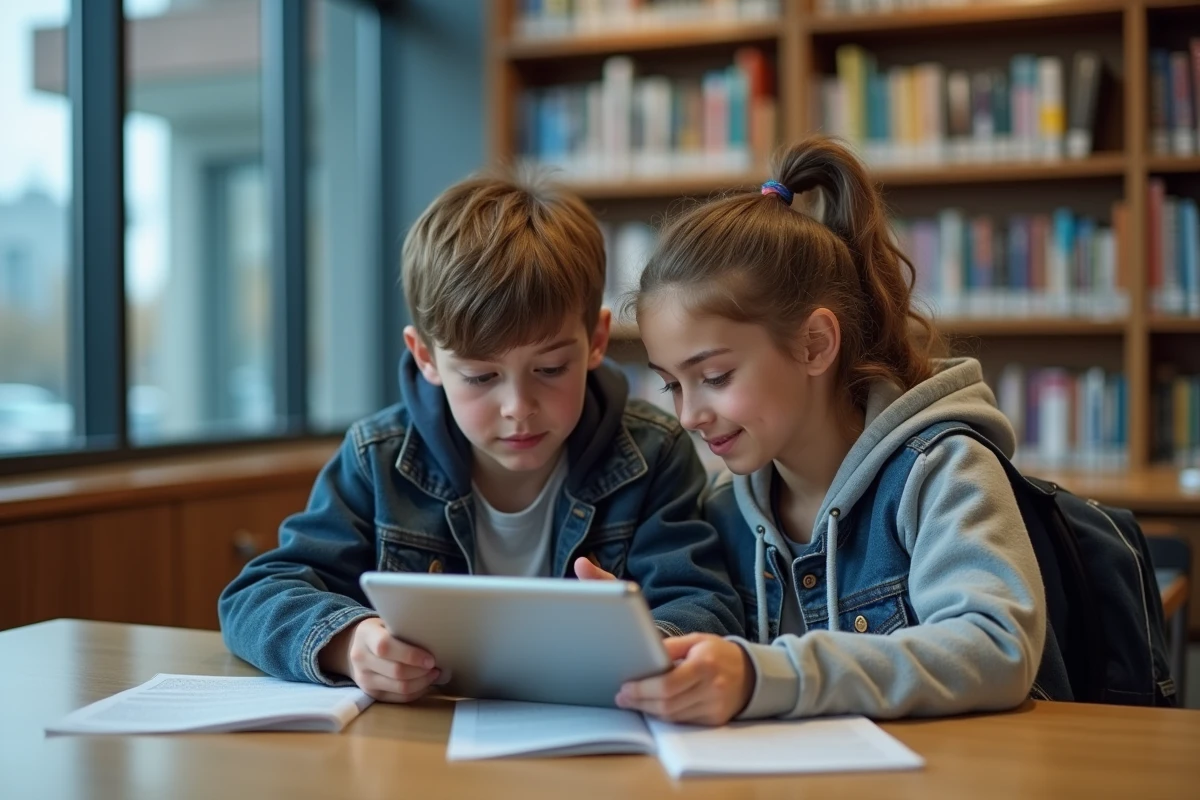
Experiments, games, and initiatives: ideas for experiencing science as a family
Bringing science home also means multiplying the reasons to be amazed and learn together. The digital world offers a wealth of fun experiments for all ages. Collaborative projects are powerful levers for transmission: workshops, competitions, games… all ways to sharpen observation skills and the taste for experimentation.
In Monts, every year, the Salon des jeunes inventeurs gives the spotlight to creators under 25. Clever prototypes, reimagined objects, and groundbreaking innovations coexist, while the public exchanges, questions, and draws inspiration from these passionate young project leaders.
Meanwhile, the Coupe de France de robotique, organized by Planète Sciences, sees 7-18 year-olds compete (in a good-natured spirit). Designing, assembling, and coding their own robot in teams: everything is designed to combine technical reflection, mutual aid, and creativity. A stimulating challenge that brings families together around a meaningful goal.
Elsewhere, local projects like Scienticfiz (led by Gilles Gourio at the Henri-Becquerel college in Avoine) multiply collective experiments. The focus is on action and the restitution of workshops. Students, along with their families, participate in activities on concrete themes, such as water management, to manipulate, observe, and understand deeply, far from passive consumption of knowledge.
Here are some tips to fully enjoy these initiatives as a family:
- Favor small group workshops to encourage real exchange.
- Participate in project calls and local events offered around you.
- Try scientific games designed to dismantle preconceived ideas and awaken critical thinking.
When science becomes shared, every attempt transforms the home into an adventure ground. No need to be a specialist: surprise is often at the end of the test, enthusiasm around a successful experiment. And the desire to try again, intact.