The French regulatory framework surrounding fashion has changed since September 1, 2026. Discussing fashion trends without integrating these constraints is akin to commenting on silhouettes in a vacuum. Here, we analyze the stylistic axes of the season through the lens of sustainability mandated by law, circularity, and the resulting textile choices.
Ultra-ephemeral tax and consequences on textile choice
The French tax targeting ultra-ephemeral fashion can reach up to 12 euros per item in 2026, with an expected increase until 2030. This measure, published by an order from the Ministry of Ecological Transition on August 30, 2026, excludes second-hand clothing.
For consumers, the direct consequence is a rise in the cost of low-end imported items. Brands positioned at rock-bottom prices must either absorb the extra cost or pass it on. In both cases, the price gap between a disposable item and a durable piece narrows.
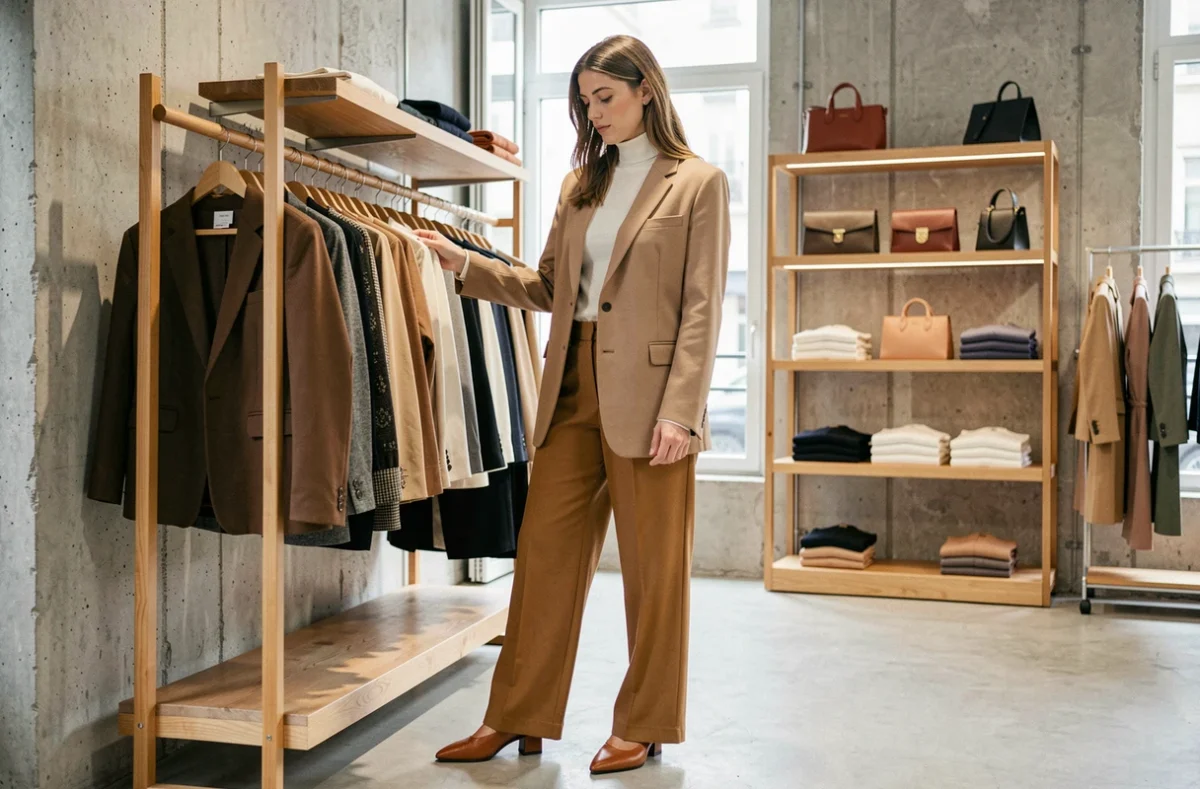
We observe that this mechanism favors materials with a sufficiently dense weight to last several seasons: combed cottons, European linens, merino wools. The barrel jeans or thick canvas trousers, prominently featured on the spring-summer 2026 runways, fit into this logic. A consumer wishing to access Toujours Le Bon Choix fashion will find a useful filter to compare the durability of items before purchase.
The law also requires online platforms to display the place of manufacture and messages encouraging reuse, repair, and recycling. This supplier transparency is gradually changing the selection criteria for informed buyers.
Fall 2026 colors: limited palette and stable pigments
The fall 2026 collections converge towards a palette of six dominant colors. This restriction is not merely aesthetic. Mono-pigment dyes facilitate textile recycling, a parameter that has become strategic since the European ban on the destruction of unsold goods for large companies.
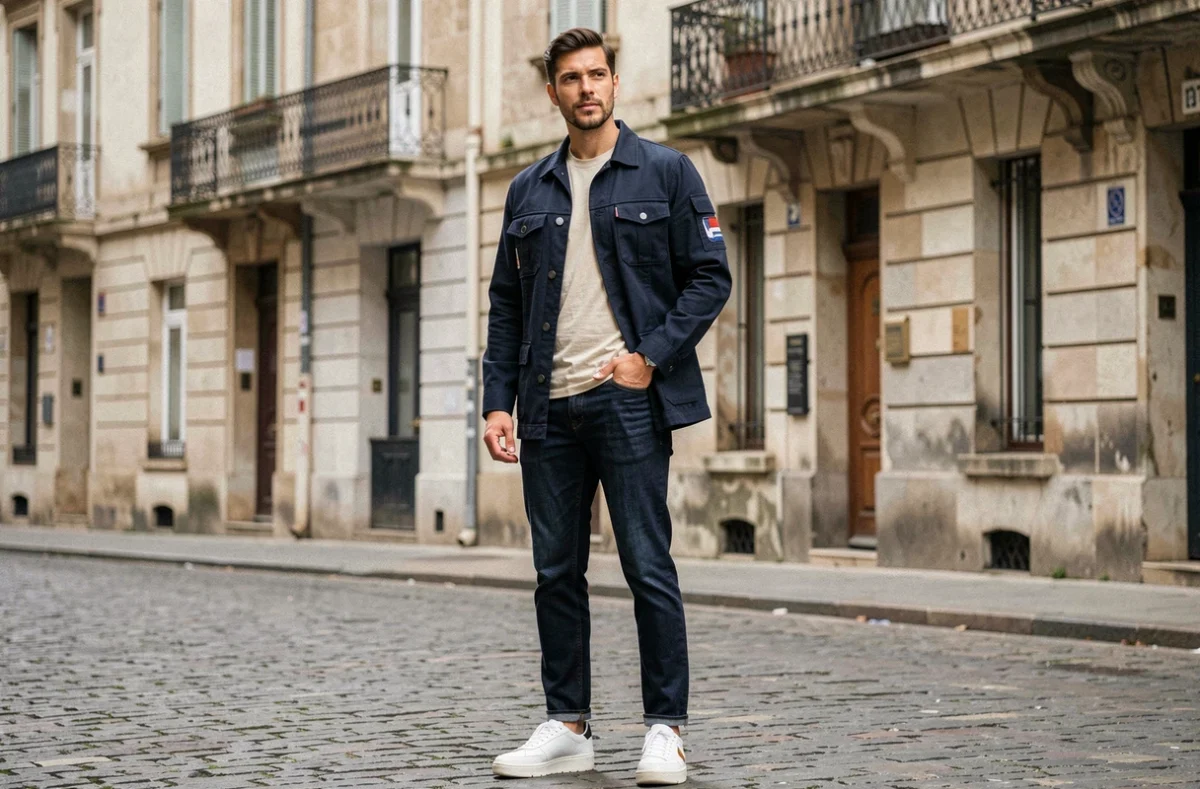
Earthy tones (ochre, tobacco brown, sage green) dominate both women’s and men’s wardrobes. Deep red remains a strong marker, worn as a total look or as a unique piece against a neutral base.
- Tobacco brown works well on a vegetable-tanned leather jacket or wide flannel trousers, both highly repairable pieces.
- Sage green is seen in oversized shirts and midi dresses, two silhouettes that can last several seasons without looking outdated.
- Off-white, far from bright optical white, stands out on thick knits and short trench coats, allowing for simplified maintenance without harsh bleaching agents.
Choosing a color is no longer just an aesthetic gesture. Favoring stable shades reduces the number of washes needed to maintain the garment’s appearance, thereby extending its lifespan.
Digital product passport: reading a garment before buying
The digital product passport (DPP) is beginning to appear on certain collections. This QR code integrated into the label provides access to the exact composition, manufacturing conditions, and repair instructions.
For the informed consumer, it is a concrete decision-making tool. Before buying a dress or jeans, scanning the DPP allows verification of whether the item can be repaired, resold, or recycled at the end of its lifecycle. The DPP transforms fashion purchasing into a documented act.
The ban on the destruction of unsold textiles, effective for large companies in the European Union and extended to medium-sized enterprises by 2030, gives the digital passport an additional function: tracking stocks to organize their redistribution rather than disposal.
Building a sustainable style: choices by morphology and use
The fashion trends of 2026 are not limited to standout pieces. They outline a wardrobe where each acquisition must be justified by its versatility.
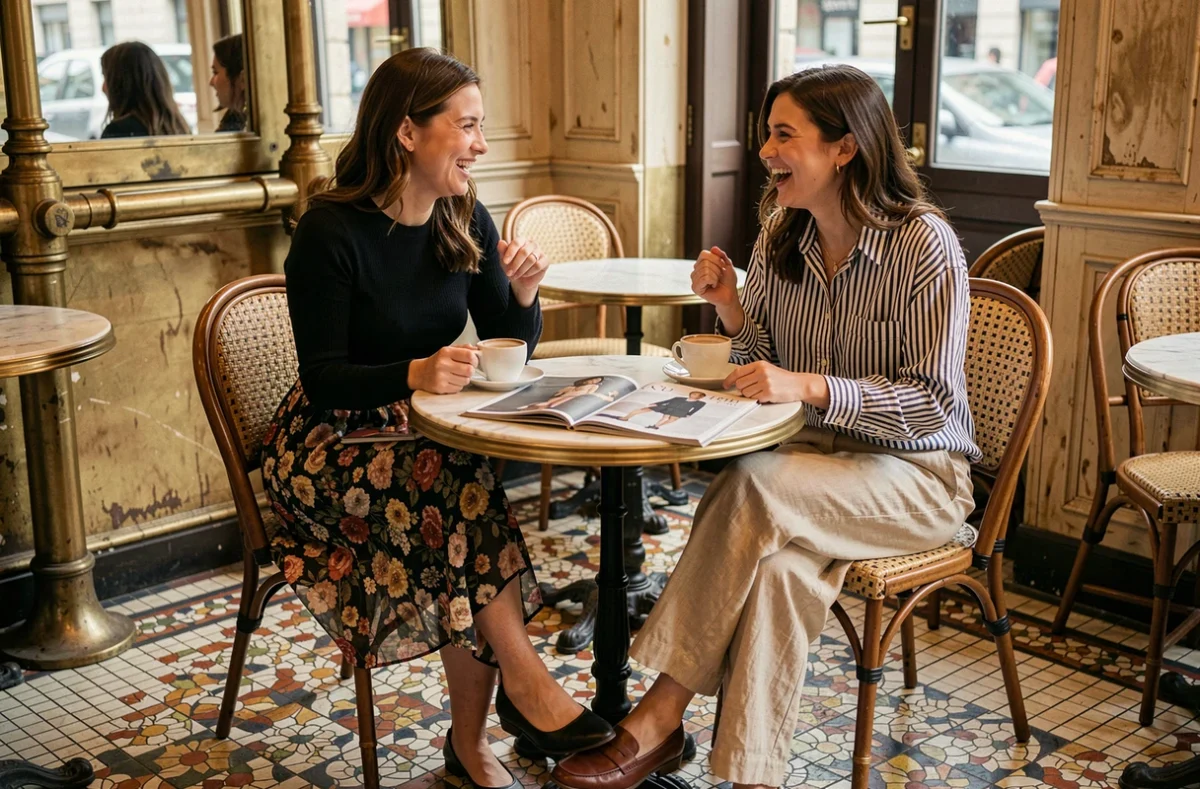
We recommend thinking in functional blocks rather than complete looks. A block consists of a structuring piece (jacket, coat, tailored trousers), a soft piece (knitwear, shirt), and a signature accessory (belt, bag, shoes).
- For an H-shaped morphology, high-waisted straight trousers paired with a short jacket create a vertical line without artificially cinching the silhouette.
- For an A-shaped morphology, a mid-calf trapeze dress in structured fabric (gabardine, thick denim) balances the volumes without requiring layering.
- For a V-shaped morphology, an oversized sweater tucked into barrel jeans softens the shoulders while staying within the spring-summer 2026 codes.
Three well-constructed blocks cover the majority of daily and professional situations. Adding a fourth event piece (a quality dress, a wool blazer) is enough to complete a functional wardrobe for twelve months.
Second-hand and repair as style levers
The tax on ultra-ephemeral fashion does not apply to second-hand clothing. This regulatory point creates a net economic advantage for vintage and selective thrift. Finding a 1990s leather jacket or a classic trench coat in excellent condition often costs less than a new equivalent, tax included.
Repair becomes a gesture of style as much as maintenance. Repairing a jacket elbow, replacing a lining, adjusting a size: these interventions extend the lifespan of a piece and give it a character that standardized new items lack. The French law explicitly encourages repair in the mandatory messages displayed by online sales platforms.
The fall 2026 fashion wardrobe reads as a balancing act between textile quality, regulatory compliance, and stylistic coherence. The pieces that will last are not those that follow a micro-seasonal trend, but those whose construction, color, and cut can withstand several years of wear and maintenance.